
About Us
Isochor is a system-focused energy technology company exploring new approaches to flexibility in power networks with high levels of renewable generation.
Our current work is centred on the development of a co-located hydrogen flexibility concept designed to address renewable curtailment and operational challenges arising at constrained points in power networks. The approach combines dynamic energy conversion, local storage, and rotating machinery to enable absorption of surplus generation and support learning around local operability under intermittent and congestion-driven conditions.
Isochor’s work is grounded in engineering-led exploration and pilot-scale deployment. We focus on collaborative projects that generate practical insight into how emerging technologies may contribute to curtailment reduction, system operability, and whole-system optimisation, rather than on near-term commercial deployment.
Who We Are
Isochor is an early-stage energy technology company focused on exploring system-level solutions to the challenges created by increasing renewable penetration in power networks.
Our current work centres on the development of a co-located hydrogen flexibility concept designed to address renewable curtailment and operational constraints at specific network locations. The approach brings together dynamic energy conversion, local hydrogen production and storage, and rotating machinery to enable absorption of surplus generation and to support learning around local operability under intermittent and congestion-driven conditions.
Isochor’s work is grounded in engineering-led exploration and pilot-scale deployment. Rather than pursuing near-term commercial roll-out, we focus on collaborative projects that generate practical insight into how emerging flexibility concepts may contribute to curtailment reduction, system operability, and whole-system optimisation.
As a founder-led company, Isochor brings together experience in thermodynamics, power conversion, and system integration to support structured experimentation in real-world network contexts. Our aim is to work with partners to explore, test, and refine new approaches to flexibility where conventional solutions face limitations.
-
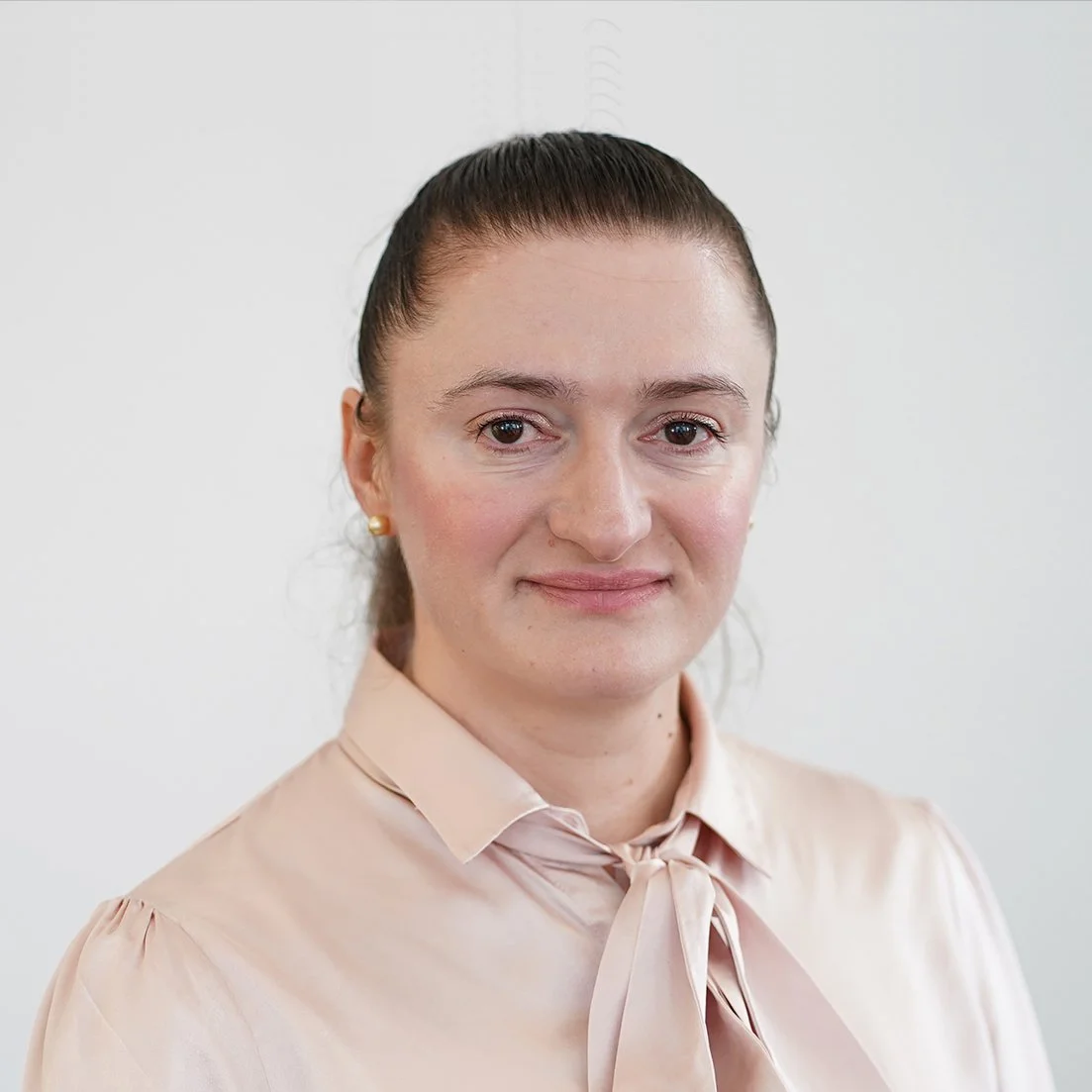
Emilia Apostol PhD.
Founder, CEO & CTO
Emilia Apostol is an engineer and technology founder focused on the development and exploration of advanced energy conversion and flexibility concepts for power systems with increasing renewable penetration.
She leads the technical direction of Isochor, where current work is centred on the development of a co-located hydrogen flexibility concept designed to address renewable curtailment and operational challenges at constrained points in power networks. Her work combines thermodynamics, power conversion, and system integration, with a strong emphasis on pilot-scale experimentation and learning under real-world operating conditions.
Emilia holds a PhD in Electrical Engineering, with a specialisation in advanced simulation and multi-physics modelling. She has over a decade of experience across energy and automotive sectors, contributing to the development of complex electromechanical and energy systems from early-stage research through to integrated prototypes.
Her background spans both startup environments and research-led organisations, where she has led vertically integrated R&D efforts and delivered technically challenging projects involving novel architectures, system-level trade-offs, and scaling considerations.
Original mechanical design sketches by engineer Vitzu Mălureanu, whose early work informs the technical lineage of Isochor.
Our Story
Isochor’s work builds on a long-standing technical interest in energy conversion, thermodynamics, and mechanical system design.
Early conceptual work explored alternative approaches to converting fuel into mechanical and electrical energy, with a focus on pressure-based cycles and rotating architectures. This foundation continues to inform Isochor’s current research direction.
Today, these ideas are being advanced through modern analysis, system modelling, and integration with emerging energy system needs, with particular attention to flexibility, curtailment reduction, and operability in power networks with high renewable penetration. Original design studies and mechanical sketches remain part of Isochor’s technical lineage, providing context for ongoing system-level exploration and collaborative experimentation.